

.jpg)
Letters and emails today—with or without AI?
Your benefits
• You experience a change of perspective and adopt a fresh, professional, and reader-oriented style of correspondence.
• You formulate clearly, comprehensibly, and in a solution-oriented manner—even when dealing with difficult topics.
• You are familiar with methods for reducing the flood of digital communication and making sensible use of AI.
What you can expect in the seminar
Correspondence with impact: fewer words, greater impression
With a positive written communication culture, you convey a friendly and professional image of your organization.
You make a convincing impression—from the first impression that counts to the last impression that lasts.
The DNA of the organization: making values and identity visible in daily correspondence.
key topics
- The challenges of written communication
- Digital communication overload: Prioritize, reduce, and write with purpose
- Reader orientation: The message begins with the recipient
- The rules of simple and easy language
- Today, a writing style free of clichés is the norm: personal, fresh, and authentic.
- The power of words: How positive communication has an impact
- Successful copywriting: even for difficult topics such as rejections, customer responses, and requests
Note
Please bring your own anonymized text (letter or email) with you (in paper form).
What you can look forward to
- cases
- Theoretical inputs
- exchange
- Teaching practical knowledge
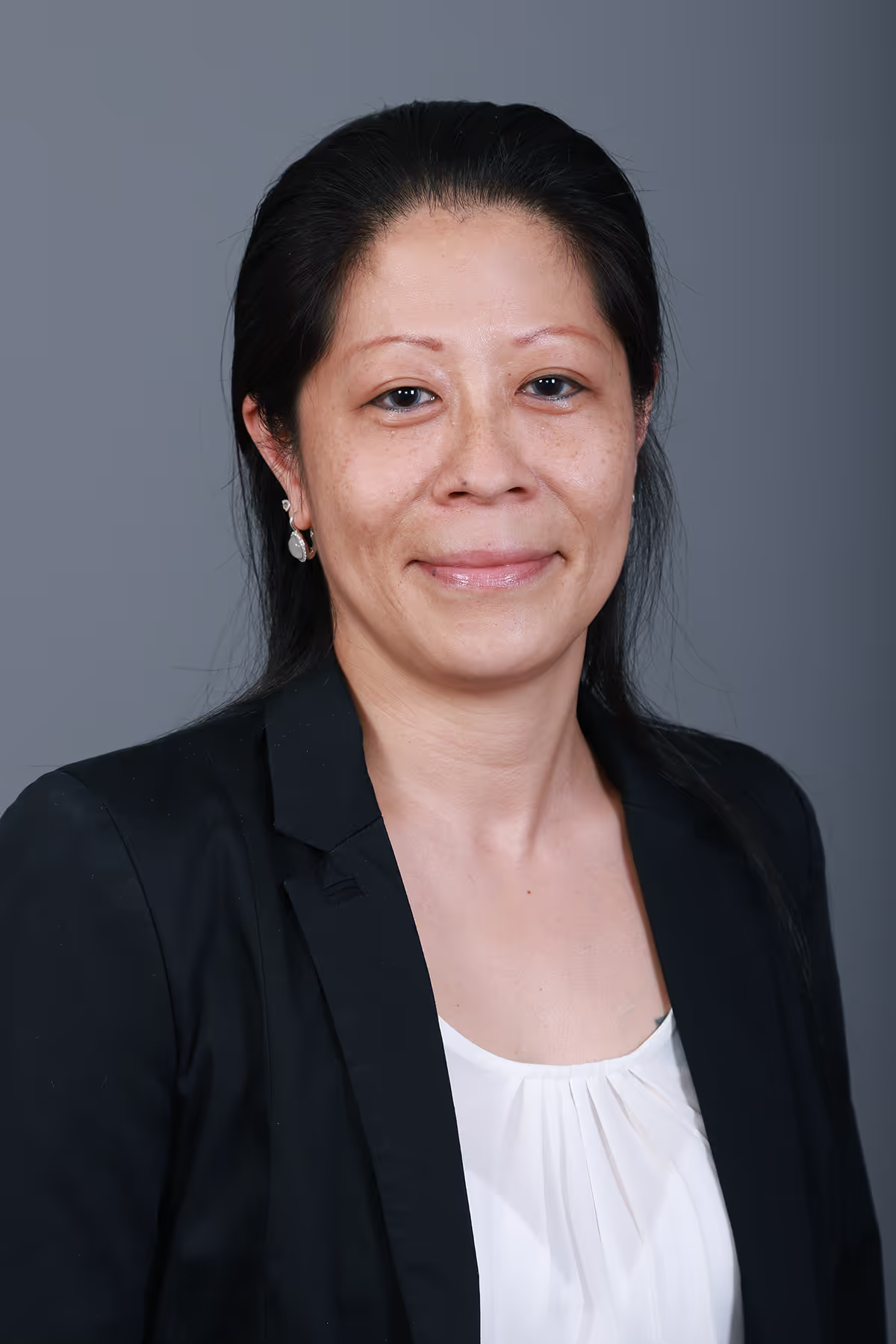
Director: Fabienne Schnyder
Communication specialist, coach, and trainer. As a dedicated bridge builder, she brings her wealth of experience in verbal and nonverbal communication to seminars and consultations.
Details
Recommended for

All tags
Areas of expertise
